Saturday, 20 October 2018

Assignment 1: Techniques and Formats

Introduction
This is the last part of assignment 1 on Techniques and Formats in stop motion animation. the different Techniques are Time-lapse, plasticine, claymation, found objects, cut out, puppetry, human stop motion (pixilation).

Time-Lapse
A time-lapse is a still image showing someone over a certain amount of time. Examples of this is steps in pregnancy, growth, a certain emotion over time etc. a benefit of using this is that you can speed up a certain event e.g. a characters pregnancy however a drawback is that it takes away the aspect of character development. Time-lapse is used on social media to show steps in pregnancy or how their child has grown. A time-lapse was used in The Simpsons to show how Homer grew up.
Plasticine
Plasticine is used to give detail to made characters. Plasticine makes the character look almost real and detailed. A benefit of using plasticine is that you can add detail however a drawback is that you have to be really careful with making and using the characters because it can break or be ruined. Plasticine stop motion is seen frequently in mainstream stop motion animation. Examples are Wallace and Gromit and Early Man.
Claymation
Claymation is used for stop motion that needs a lot of free movement, you can use your full imagination with this technique and make whatever you want. A benefit of Claymation is that you can make and do what you want however a drawback is that you can easily break the clay item. Claymation is mostly found on YouTube made by talented creators. Examples are Magic Water, PES and Spook Train.
Found Objects
Found objects stop animation is the use of non drawn items such as toys, blocks, dolls etc. This is found on TV a lot. A benefit of found object stop animation is that the objects are easy to find and you don't have to make them however the drawback is that if it's going to be professional you have to be careful with copyright. examples of this are robot chicken, counter656 and Action League.
Cut Out
Cut out animation is 2D flat cut out characters, sets, backgrounds from paper, card, fabric or photographs. The benefit of using this type of stop motion is that you don't have to move the camera as it's 2D however a drawback is that there isn't a lot of movement available which could make it boring. Examples of this is Lump, South park and Journey of Love.
Puppetry
Puppetry is stop motion with the use of puppets, they are very detailed and look realistic when moving, this is due to their human like qualities. A benefit of this type of stop motion is that it is realistic however a drawback is that it takes a long time to make the puppets and you have to pay close attention to detail, Examples include Corpse Bride, The Humpty Dumpty Circus and The Nightmare Before Christmas.
Human Stop Motion (Pixilation)
Human Stop Motion or better known as pixilation s pretty straight forward, it's the use of real life and a real human being. The benefit of using this type of stop motion is that you don't have to spend any money or create a character however a drawback is that it will not look realistic because it's stop motion not live action. Examples of this Peter Gabriel's song Sledgehammer, Joe Weller's college pixilation and Happy Day. 


Assignment 1: Uses and Audiences

Introduction
This is part 2 of task 2 about uses and audiences for stop motion in different stuff like feature film, advertising, music videos, computer games, websites and TV.

Feature Film
Stop motion is used in feature films for art and to make it more eye catching. The audience for feature films are teenagers and above, kids and younger tend to have a short attention span so they wont watch all of it. examples of stop motion feature films are Frankenweenie, Corpse Bride, Caroline and more. A benefit of this is it attracts more attention to stop motion animation however the drawbacks are that it takes a really long time, effort and patience and you have to build large sets.
Advertising
Stop motion is used in advertising to catch the audiences eye so they'd want to watch the advert. The audience for adverts are 50+ adults and seniors mainly because they watch normal TV instead of streaming sites as they are old and don't want to change. examples of stop motion adverts are the Hotels.com advert, the Royal London Insurance advert, the Money Supermarket advert etc.
A benefit of stop motion in adverts is that it is eye catching so views are more likely to watch it however a drawback is that most people use streaming sites nowadays and if there are adverts they are usually skippable, which they do.
Music Videos
Stop motion is used in music videos to created meaning and a story behind the music. The audience is teenagers and young adults, older usually just listen to the radio and younger don't watch it because they are either listening to songs more or less for their age or just listening to spotify. Examples of stop motion in music videos are Moving On by Ainslie Henderson, Sledgehammer by Peter Gabriel , In Your Arms by Kina Grannis and more. A benefit is that the music makes the story of the stop motion a lot more effective however a drawback is that there isn't a lot of time in a music video so you have to make the stop motion animation short.
Computer Games
There isn't really any stop motion in computer games, computer games are a different kind of experience however if there were any stop motion in a computer game it'll make it unique and probably a must buy. The audience of computer games are usually kids and teens because they seem to appeal to kids and teens more. The benefits of having stop motion would be ,like I said, unique and different making it a must buy and it'll probably increase the fan base of stop motion however the drawbacks are that it'll be hard as computer games are different, also it'll be limited because it could only be used in cutscenes.

Websites
Like computer games, stop motion usually isn't really used for this as a website wouldn't need it . If there was stop motion on a website it would probably be an ad. The audience of websites are adults and maybe older teens to see what's going on in the world or to look for something e.g. wikipedia. The benefit of having stop motion on a website would be like computer games, unique and would bring attention however the drawback is that there is no actual need for stop motion on a website.

TV
Stop motion is used on TV, this is mainly used to entertain kids or maybe even to make teens laugh. The audience for TV is everyone, there's something for each and every person to enjoy on TV. Examples of stop motion on TV are Wallace and Gromit, Peppa Pig Stop Motion, Angry Kid, Robot Chicken etc. The benefits for having stop motion on TV is that it brings new people into the world of stop motion and may even bring in some potential stop motion animators in the future. There isn't really any drawbacks to stop motion being on TV.


Friday, 19 October 2018

Assignment 1: Purpose

Introduction
This is part 1 of task 2 about purpose of stop motion animation. The three purposes are to, educate, entertain and inform the audience.

Educate
Stop motion animation could be used to educate the audience. Maybe to teach children or show you something you didn't know about before or to even educate adults on certain world events. The main audience for this world be young children and it'll be used to teach them such things as numbers, the alphabet or about different items. It'll gain money because schools would use it, parents would use it and kids TV channels like Cbeebies to educate their kids. Here are some examples of educational stop motion animations:
Entertain
The main purpose of stop motion animation is to entertain the audience. This is the one that brings in the most audience because it's for all ages and all types of audience members. The soul purpose of this is to just enjoy the movie. Entertaining stop motion is the most popular type of stop motion, it contains stop motions like, Early Man, Wallace and Gromit, The Nightmare Before Christmas, Caroline etc.
Inform
finally stop motion can be used to inform the audience. This is mainly used in adverts to inform the audience of such things as a healthy diet or road safety. The main audience for this purpose is adults because it mainly revolves around them as they need to eat healthy and be safe on the road. Stop motion is probably used here to catch the adults eye as they mostly skip ads or not watch them as they can be boring. Examples for this are:

Assignment 1: Contemporary

Introduction:
This is part 4 of task 1 about contemporary stop motion animation filmmakers. These are modern day film makers, they are paving the path for the future of stop motion animation. They are influencing people to become stop motion animation and they are developing it into something amazing and new.

The Brothers Quay:
Stephen and Timothy Quay are American identical twin brothers and influential stop-motion animators. A major influence on them is Jan Svankmajer, they even named a movie after him, The Cabinet of Jan Svankmajer. They are known for such films as Institute Benjamenta, or This Dream People Call Human Life (1995), The Piano Tuner of Earthquakes (2005), the short film Punch And Judy: Tragical Comedy or Comical Tragedy (1980). The Brothers Quay's movies are dark and ominous. I believe their audience is mainly adults or the elderly due to the use black and white. The Brothers Quay are not mainstream. The Brothers Quay don't seem to make too much in the box office, The Piano Tuner of Earthquakes only made $29,121, this is mainly because their movies are not mainstream, they are for a specific audience which is lovers of the black and white era because that's what the Brothers Quay adore, a quote from them "the two most beautiful colours are black and white."

Tim Burton
Tim Burton is an American director known for his originality. Tim Burton is unique and will be known heavily by the stop motion community. Thanks to him stop motion animation will have a future and he will influence a lot of people to take up stop motion. Tim Burton is known for such movies as Beetlejuice(1988), Edward Scissorhands (1990), The Nightmare Before Christmas (1993) and Corpse Bride (2005). Tim Burton's movies are mainstream and the audience is practically anyone, people of all ages seem to enjoy his work. In the box office, Tim Burton makes between $70 million - $120 million. Beetlejuice made $73 million, Edward Scissorhands made $86 million, The Nightmare before Christmas made $76.20 million and Corpse Bride made $117.2 million. Tim Burton's work is unique and new, he's managed to make creepy movies for all ages bringing in more viewers and I believe that Tim Burton is going to make a massive impact on the future of stop motion.

Assignment 1: Developers

Developers

Introduction:
This is part 3 of task 1 about developers. These people improved stop motion, thanks to them, stop motion is much more aesthetic and magical. Because of them, the future of stop motion is going to be huge and great as they motivate youths to carry on improving stop motion.

Willis O'Brien:
Willis O'Brien was an American motion picture special effects and stop-motion animation pioneer. O'Brien was described to be "responsible for some of the best-known images in cinema history." His work consisted of The Lost World (1925), King Kong (1933) and Mighty Joe Young (1949). Willis O'Brien opened up a whole new path way for stop-motion animation and helped it become what it is today. If it wasn't for O'Brien we wouldn't have such movies like Kong: Skull Island, Jurassic Park or Godzilla. Willis O'Brien mentored Ray Harryhausen who worked with Willis O'Brien on Mighty Joe Young. 


Ray Harryhausen:
Ray Harryhausen was  an American born British artist, designer, visual effects creator, writer and producer who was mentored by Willis O'Brien. Ray Harryhausen is known for such films as Mighty Joe Young (1949) which he worked on with Willis O'Brien, The 7th Voyage of Sinbad (1958), Jason and the Argonauts (1963) and Clash of the Titans (1981) which was his last film. Ray Harryhausen carried on Willis O'Brien's legacy and the art of stop motion animation inspiring such filmmakers as Steven Spielberg, Peter Jackson, Joe Dante, Tim Burton, Nick Park, James Cameron, Guillermo del Toro and influenced George Lucas, J.J. Abrams, Wes Anderson, Henry Selick, John Lasseter and John Landis. If it wasn't for Ray Harryhausen carrying on Willis O'Brien's legacy and developing stop motion animation we wouldn't have all those amazing filmmakers today.
Jan Svankmajer
Jan Svankmajer is a Czech filmmaker and artist. Svankmajer is mainly known for Alice (1988), Faust (1994), Conspirators of Pleasure (1996), Little Otik (2000) and Lunacy (2005), he also has a new project coming soon in 2018 called Insects so you can call him a modern developer. Svankmajer influenced other artists such as Terry Gilliam, the Brother Quay and many others. As a modern developer, Jan Svankmajer is paving a path for the future, opening up new opportunities and maybe even inspiring new filmmakers. Svankmajer is a main part of the future of stop motion animation, he is helping people develop and evolve stop motion animation and influencing new people to take stop motion up.


Friday, 28 September 2018

Assignment 1: Pioneers

Pioneers

Introduction:
This is part 2 of task 1 about pioneers. These pioneers impact the future of stop motion largely because they created the technology for us to mimic movement. Without them there wouldn't be stop motion animation. 

John Plateau
John Plateau was the inventor of the Phenakitoscope, the first widespread fluid 'illusion of motion' animation contraption. It was only a short continuous loop however it was the one of the first moving media entertainment devices that paved the way for future devices and film industries. It was released as a scientific invention because it was invented through scientific research of optical illusions. However, it was then referred to as a novelty toy. When the novelty aspect wore off it was then referred to as a children's toy. Joseph Plateau was a Belgian physicist from Brussels and was known for his research of soap bubbles (Plateau's Laws).
Image result for Joseph Plateau


William Horner
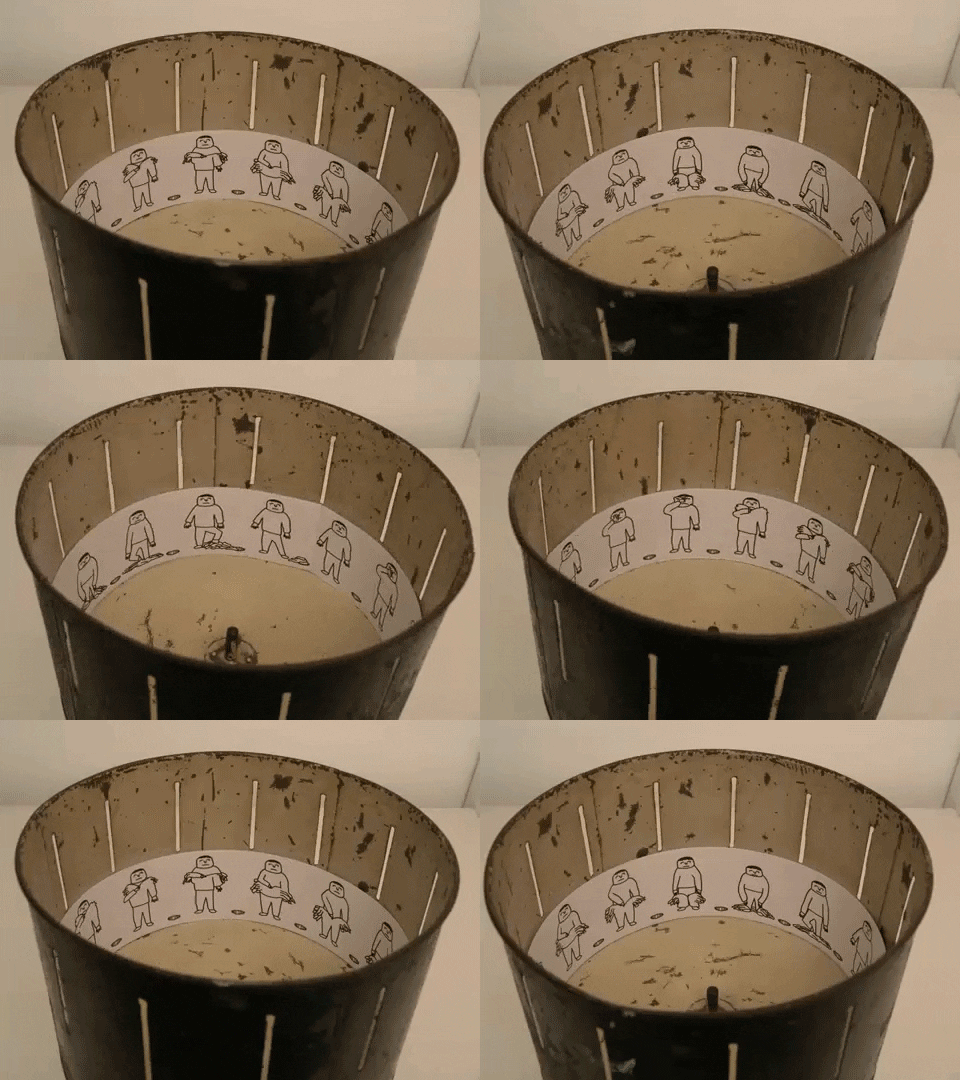
William Horner was one of the inventors of the Zoetrope. William Horner was a British mathematician who after taking notice of Joseph Plateau's work on the Phenakitoscope (which was released in England as 'Phantasmascope') invented a cylindrical version of the Phenakitoscope. Horner published the details of its mathematical principles in January, 1834. The Zoetrope was originally called 'The Dædaleumby Horner as a reference to the Greek myth of Daedalus. Unlike the later versions of the Zoetrope that had viewing slits above the pictures, Horner's was a revolving drum with viewing slits between the pictures. This variation (The Dædaleum') was supposed to be published in Bristol with optician King Jr but it "met with some impediment probably in the sketching of figured".
Image result for zoetrope gifImage result for William George Horner

Emile Reynaud
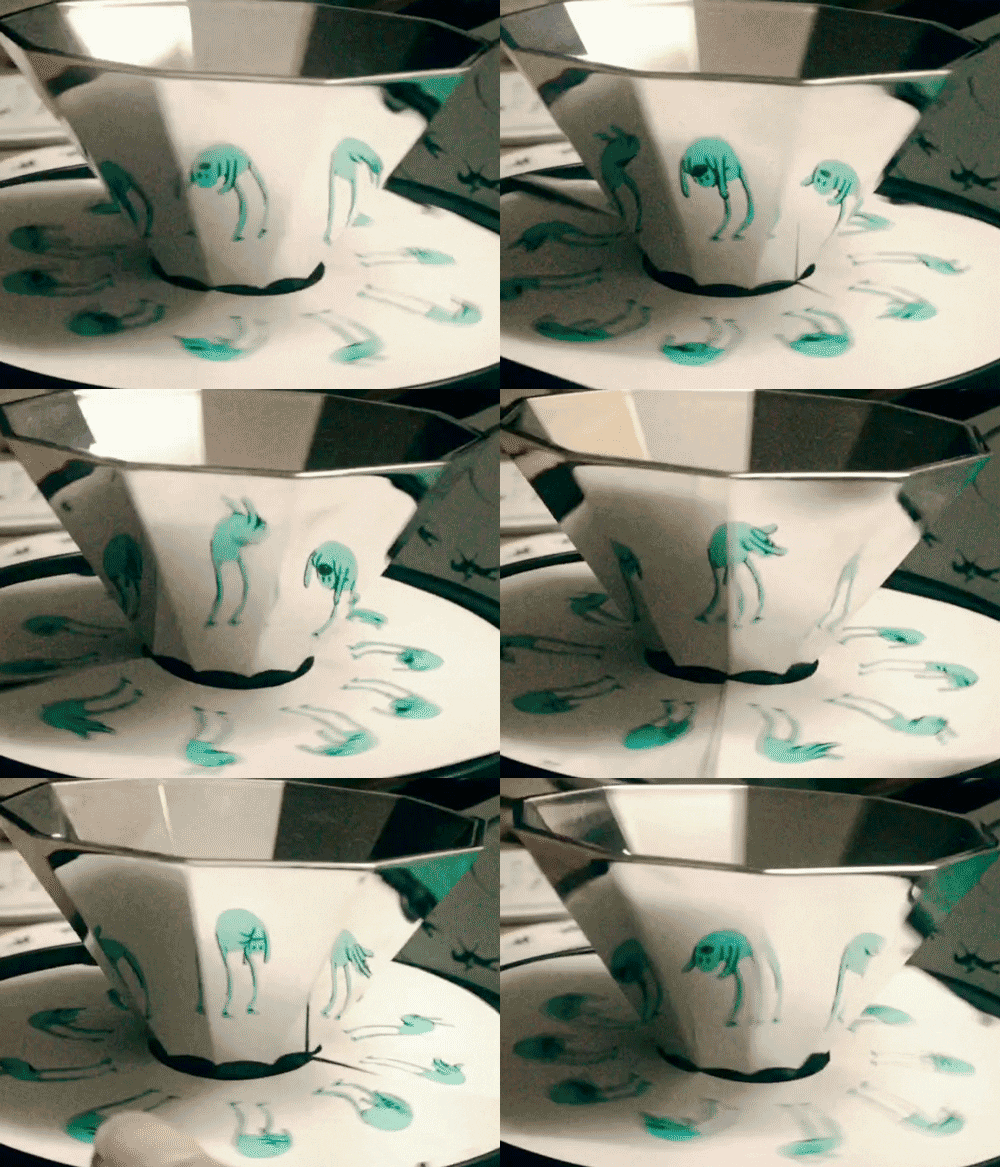
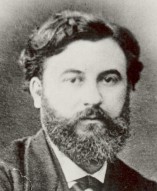
Emile Reynaud was the inventor of the Praxinoscope. Emile Reynaud was a french inventor and invented the praxinoscope in 1877. The praxinoscope is the successor to the Zoetrope. Like the Zoetrope, the Praxinoscope uses a spinning cylinder with a strip of pictures placed around the inner surface. Unlike the Zoetrope, the Praxinoscope has an inner circle of mirrors instead of the Zoetrope's narrow viewing slits. If you looked at the mirrors you would see a rapid succession of images producing the illusion of motion, it would brighter and less distorted than what the Zoetrope produced.
Image result for praxinoscope gifReynaud.jpg

Assignment 1: Techniques


Techniques


Introduction:
This is part 1 of task 1 about techniques. These techniques impact on the future of stop motion because without stop frame and frame rate there wouldn't be stop motion. Persistence of vision, beta movement and the phi phenomenon are an important impact because it helps to create movement.   

Persistence of Vision:
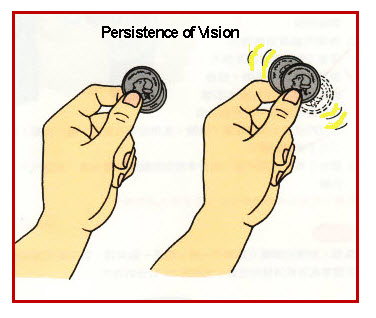
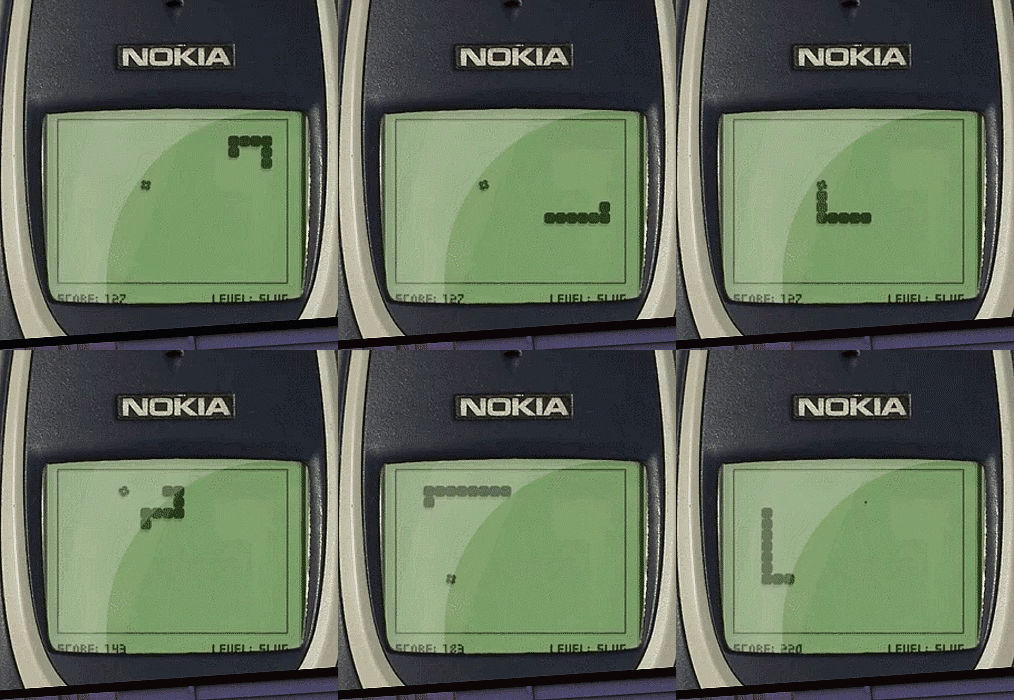
Persistence of Vision is a theory which says that the human brain subconsciously stores images for around 1/25 of a second. The human brain recognises a fluid movement when slightly different images are shown in a quick succession. It was later debunked because it only explained why black slides on early projected animations and films were not recognised by the audience (This was known as an ‘illusion’ and only worked when it was down to 16 fps). Two more theories came out about vision called ‘The Phi Phenomenon’ and ‘Beta Movement’. The Phi Phenomenon was founded by Max Wertheimer in the early 1900s. The Phi phenomenon is an optical illusion that when different objects are viewed in rapid succession gave the illusion of movement. Beta Movement was also founded by Max Wertheimer in the early 1900s. Beta Movement, like The Phi Phenomenon, is also an optical illusion where a series of static images on a screen can create the illusion of smoothly flowing scenes. This happens where the frame rate is higher than 10-12 images per second.
Phi Phenomenon Example:
 Beta Movement Example (Snake Game): https://playsnake.org/
Image result for persistence of visionImage result for phi phenomenon gifImage result for snake game gif
       Persistence of Vision                 The Phi Phenomenon                     Beta Movement
Stop Frame:
‘Stop Frame’ is a type of animation where each frame is manipulated that when played together in quick succession, images seem to move. There are positives and negatives to Stop Frame animation. The positives are that you have more control, you can animate inanimate objects, you can create more surreal story lines, you can make difficult subjects easier to tackle and you can create interesting effects. The negatives are that it is difficult to get the correct speed, it is time consuming, you can’t have fluid motion, it is difficult to visualise and you need to create a separate audio track.
Example (Wallace and Gromit): 

A recent example (Early Man): 

Image result for wallace and gromitImage result for early man
                Wallace and Gromit                                          Early Man
Frame Rate:
Frame rate is expressed in ‘frames per second’ (fps). It is the rate at which consecutive images called frames appear on a screen. It is seen in film, video cameras, computer graphics and motion capture systems. Frame rate can also be called frame frequency which is expressed in hertz.
Frame Rate Example (Beginners Guide to Frame Rates): http://aframe.com/blog/2013/07/a-beginners-guide-to-frame-rates/
Image result for frame rate
                                    Frame Rate Chart