Techniques
Introduction:
This is part 1 of task 1 about techniques. These techniques impact on the future of stop motion because without stop frame and frame rate there wouldn't be stop motion. Persistence of vision, beta movement and the phi phenomenon are an important impact because it helps to create movement.
Persistence of Vision:
This is part 1 of task 1 about techniques. These techniques impact on the future of stop motion because without stop frame and frame rate there wouldn't be stop motion. Persistence of vision, beta movement and the phi phenomenon are an important impact because it helps to create movement.
Persistence of Vision:
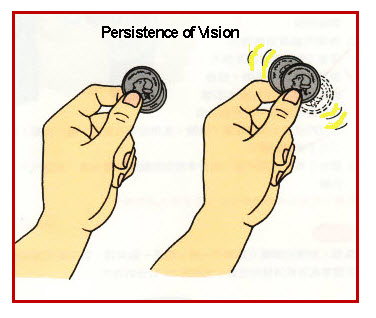
Persistence of Vision is a theory which says that the human
brain subconsciously stores images for around 1/25 of a second. The human brain
recognises a fluid movement when slightly different images are shown in a quick
succession. It was later debunked because it only explained why black slides on
early projected animations and films were not recognised by the audience (This
was known as an ‘illusion’ and only worked when it was down to 16 fps). Two
more theories came out about vision called ‘The Phi Phenomenon’ and ‘Beta
Movement’. The Phi Phenomenon was founded by Max Wertheimer in the early 1900s.
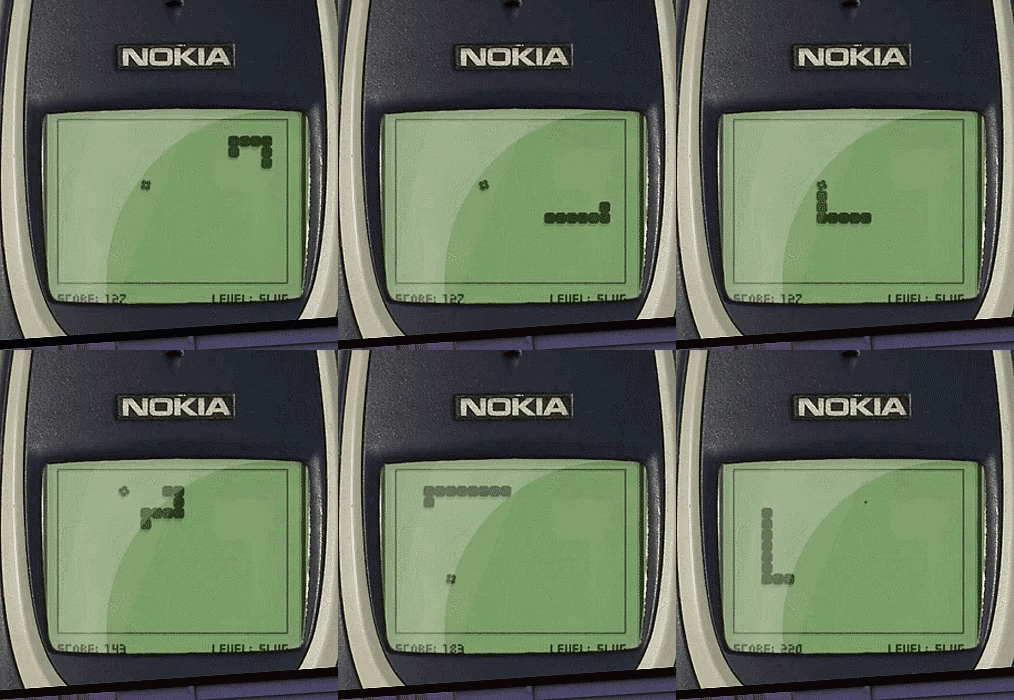
The Phi phenomenon is an optical illusion that when different objects are
viewed in rapid succession gave the illusion of movement. Beta Movement was
also founded by Max Wertheimer in the early 1900s. Beta Movement, like The Phi
Phenomenon, is also an optical illusion where a series of static images on a
screen can create the illusion of smoothly flowing scenes. This happens where
the frame rate is higher than 10-12 images per second.
Phi Phenomenon Example:

Persistence of Vision The Phi Phenomenon Beta Movement
Phi Phenomenon Example:
Persistence of Vision The Phi Phenomenon Beta Movement
Stop Frame:
‘Stop Frame’ is a type of animation where each frame is
manipulated that when played together in quick succession, images seem to move.
There are positives and negatives to Stop Frame animation. The positives are
that you have more control, you can animate inanimate objects, you can create
more surreal story lines, you can make difficult subjects easier to tackle and
you can create interesting effects. The negatives are that it is difficult to
get the correct speed, it is time consuming, you can’t have fluid motion, it is
difficult to visualise and you need to create a separate audio track.
Example (Wallace and Gromit):
A recent example (Early Man):
A recent example (Early Man):


Wallace and Gromit Early Man
Frame Rate:
Frame rate is expressed in ‘frames per second’ (fps). It is the rate at which consecutive images called frames appear on a screen. It is seen in film, video cameras, computer graphics and motion capture systems. Frame rate can also be called frame frequency which is expressed in hertz.
Frame Rate Example (Beginners Guide to Frame Rates): http://aframe.com/blog/2013/07/a-beginners-guide-to-frame-rates/

Frame Rate Chart
Frame Rate Chart

A little descriptive Jamie maybe link to contemporary examples how did these early pioneers impact on the current animators and their work? Can you embed the youtube clips rather than just the address
ReplyDelete